At A Glance:
- Location : Carterton, Oxfordshire
- Client: Royal Air Force (RAF)
- Consultant: Tamdown Group Ltd
Products Supplied:
- Models supplied: 325C1/SC, 460C1/SC and 6400C1/SC
- BS EN 858 third party certification by HR Wallingford
- From 3 litres per second to 800 litres per second flow rate (Nominal Size) within a single unit
- From 30 l/s up to 8,000 litres per second peak flow rates
- Model supplied: P050/1CSC
- Model supplied has a flow rate of 50 litres per second and catchment area of 2,778m2
- Treats 100% of the flow and includes an Automatic Closure Device that will automatically close off the system in the event of a large oil spill.
- BS EN 858 third party certification by HR Wallingford
- Model supplied: FP1C/SC
- Model supplied has a flow rate of 20 litres per second and catchment area of 1,111m2
- Treats 100% of the flow and includes an Automatic Closure Device that will automatically close off the system in the event of a large oil spill.
- BS EN 858 third party certification by HR Wallingford
- 7,600 litre spill capacity to capture a tanker compartment
- Class 2 version (for discharge to foul sewer or 2 Chamber model (designed for longer intervals between maintenance thanks to enhanced protection of the coalescers)
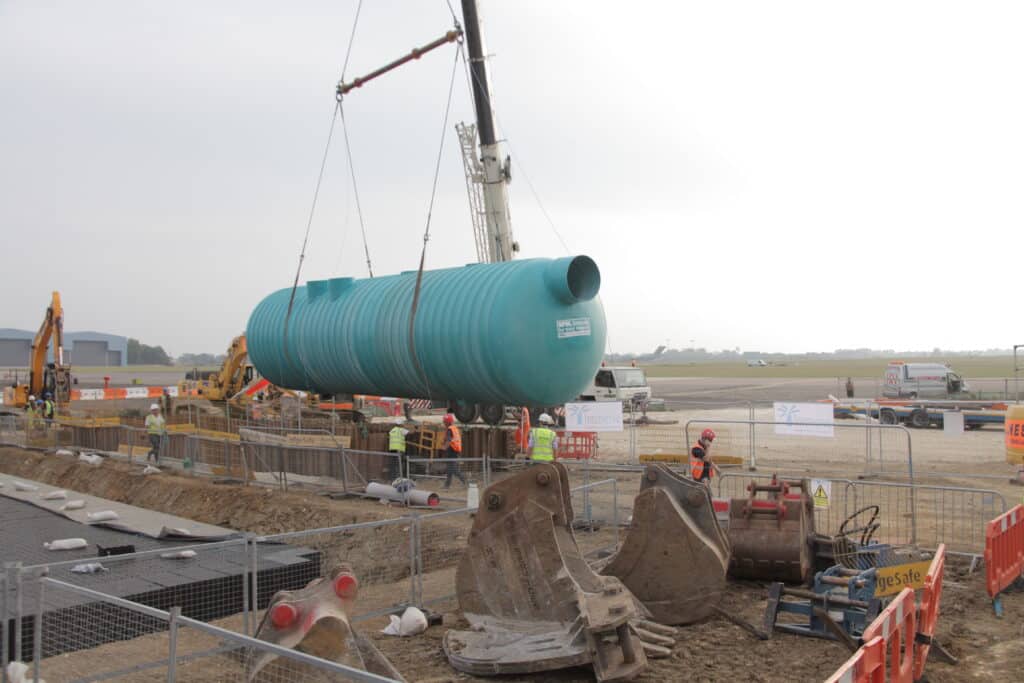
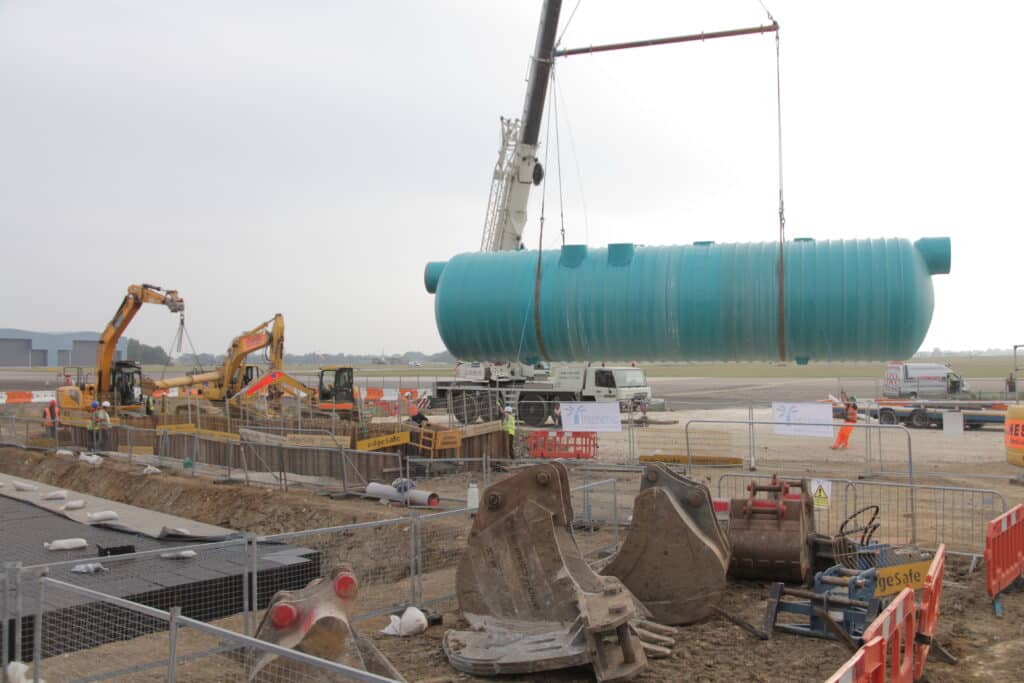
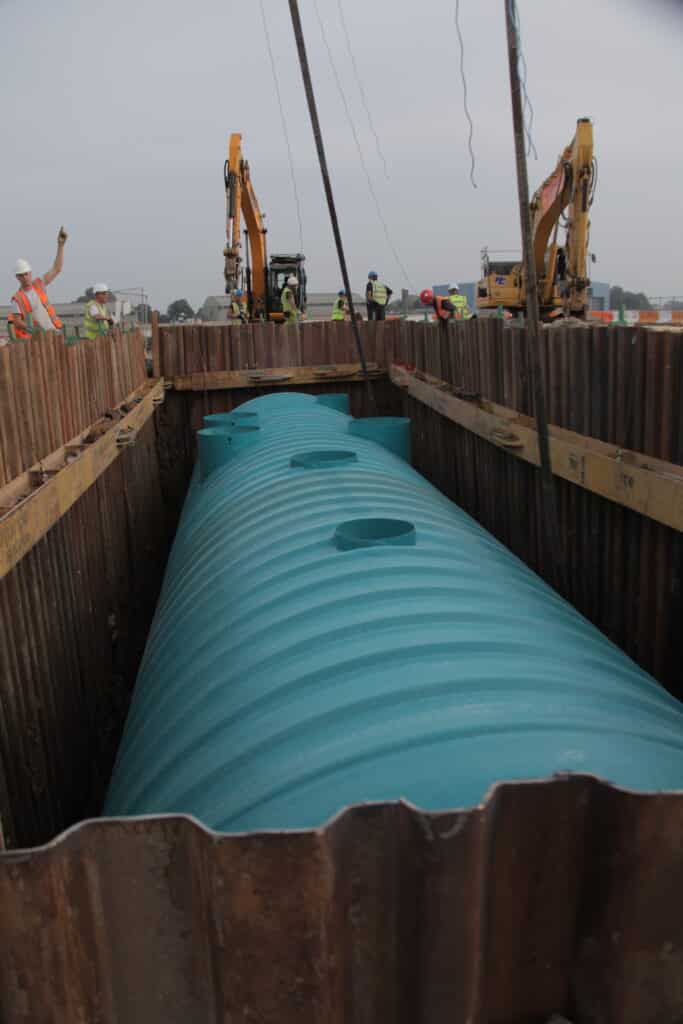
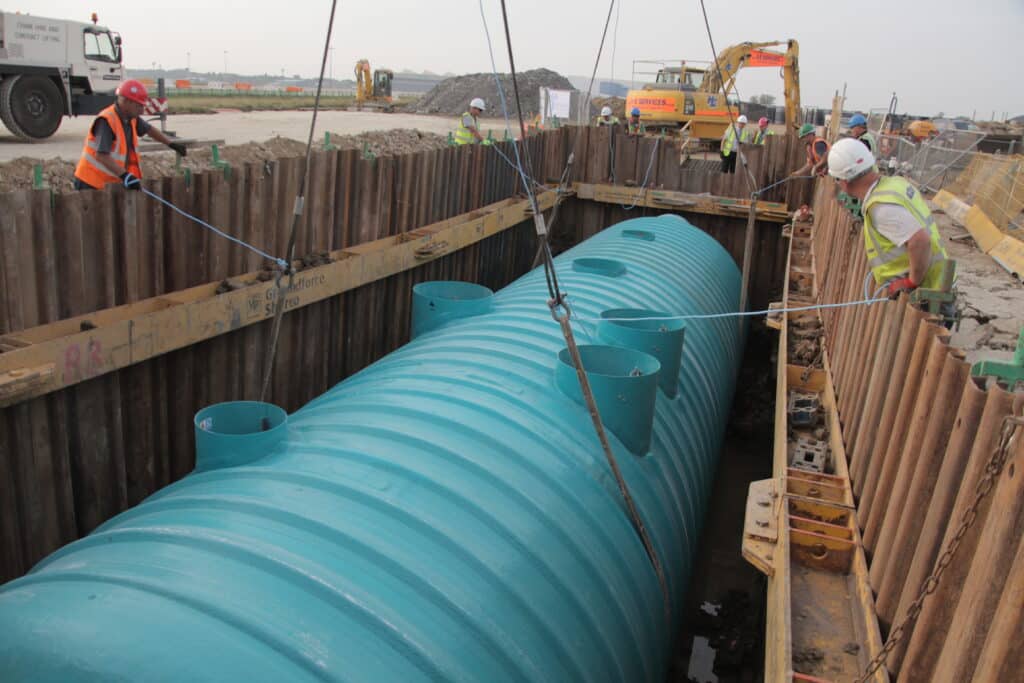
RAF Brize Norton is located about 30 minutes from Oxford, UK. It is the largest RAF base in the world, with around 6,000 staff and Service Personnel over 1,190 acres! The RAF’s Air Mobility Force (Air Transport) and Air-to-Air Refuelling forces, utilising aircraft such as the Airbus Voyager, Atlas C.1 A400M and Boeing C-17A Globemaster.
Large airport runways often utilise by-pass oil separators due to the very large catchment are that is being covered. On this site, 3no. SPEL Stormceptor’s were utilised to cover the main runways and taxiways as large spill risks are unlikely and therefore treating the ‘first flush’ or first 10% flow and allowing the storm flow to bypass is often acceptable. However for areas with a higher spill risk, such as in refuelling locations, or bowser parking areas, full retention separators are often used.
In this case a SPEL Puraceptor P050/1CSC which has a spill capacity of around 17,000 litres and a SPEL Puraceptor FP1C/SC forecourt separator was also supplied which has a spill capacity of 7,600, which is the capacity of a complete section of a standard fuel tanker, however on some MOD bases, large fuel tankers are used and therefore larger spill capacity is required, such as from a P050/1CSC.