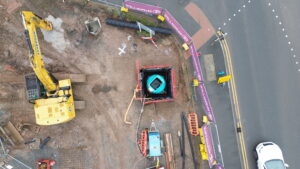
Located in Hereford, the Hereford Railway Station Bus Transport Hub is a key regional interchange, connecting rail and bus services. As part of ongoing infrastructure improvements, the site required a robust drainage solution capable of managing surface water runoff while protecting the surrounding environment from pollution.
Given the nature of transport hubs, with constant vehicle movement and large impermeable surfaces, effective water management is essential to ensure both operational performance and regulatory compliance.
The Challenge
Surface water runoff at transport hubs such as this one often carries contaminants, including oils, fuel residues, and debris. At Hereford, the drainage design needed to address these risks while also accommodating site constraints and a tight construction programme.
Traditional in-situ solutions can increase installation time and complexity, particularly on busy sites where minimising disruption is a priority. The project, therefore, required a solution that could deliver reliable performance while simplifying installation and reducing on-site workload.
The Solution: SPEL System Installation
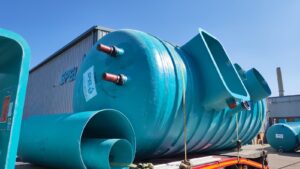
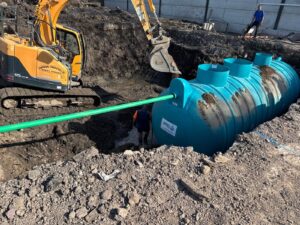
To meet these requirements, two SPEL systems were installed: a SPEL V Series Packaged Pumping Station and a SPEL Stormceptor Bypass Separator.
The V Series pumping station provides a fully engineered solution for transferring surface water where gravity drainage is not achievable. Its packaged design allows for efficient installation, with the tank being pre-assembled off-site to reduce construction time and improve consistency.
Working alongside this, the SPEL Stormceptor Bypass Separator delivers effective pollution control by capturing hydrocarbons, sediment and floating debris before they can enter the wider drainage network. Its bypass design ensures consistent performance across varying flow conditions, making it well-suited to the demands of a transport hub environment.
Project Benefits
The combination of these systems has created a reliable and efficient drainage strategy for the site. Surface water is now managed in a controlled and effective way, reducing the risk of flooding and ensuring the infrastructure can cope with peak rainfall conditions.
Environmental protection is also significantly improved. By capturing pollutants at source, the system helps to protect local watercourses and supports compliance with environmental standards, an increasingly important consideration for urban developments.
A key advantage of the SPEL approach is the efficiency it brings to installation. The packaged nature of the systems reduces the need for extensive on-site construction, helping contractors save time and minimise disruption. Feedback from the site team reflected this clearly, noting that the systems were “ideal” and significantly reduced the amount of work required within the excavation.
In addition, early collaboration with SPEL’s in-house technical team ensured the solution was tailored to the specific needs of the project. This streamlined the process from design through to installation, giving confidence that the systems would perform as required once in operation.
Outcome
The successful installation of the SPEL systems has provided the Hereford Railway Station Bus Transport Hub with a dependable, long-term solution for surface water management and pollution control.
For transport infrastructure projects, effective drainage is critical not only for performance but also for environmental responsibility. By combining pumping and treatment technologies into an integrated solution, SPEL has delivered a system that is both practical to install and reliable in operation.
The project demonstrates how well-designed, pre-engineered systems can simplify construction while delivering high-performance results in complex urban environments.
The Hereford project highlights the value of early collaboration, thoughtful design and engineered solutions in delivering infrastructure that meets the demands of modern urban environments.
See our site visit and project overview: