At A Glance:
- Location : Penparc, Cardigan, Wales
- Client: Asgard Renewables
- Contractor: Syrus Energy
Products Supplied:
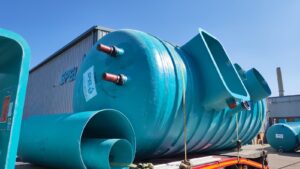
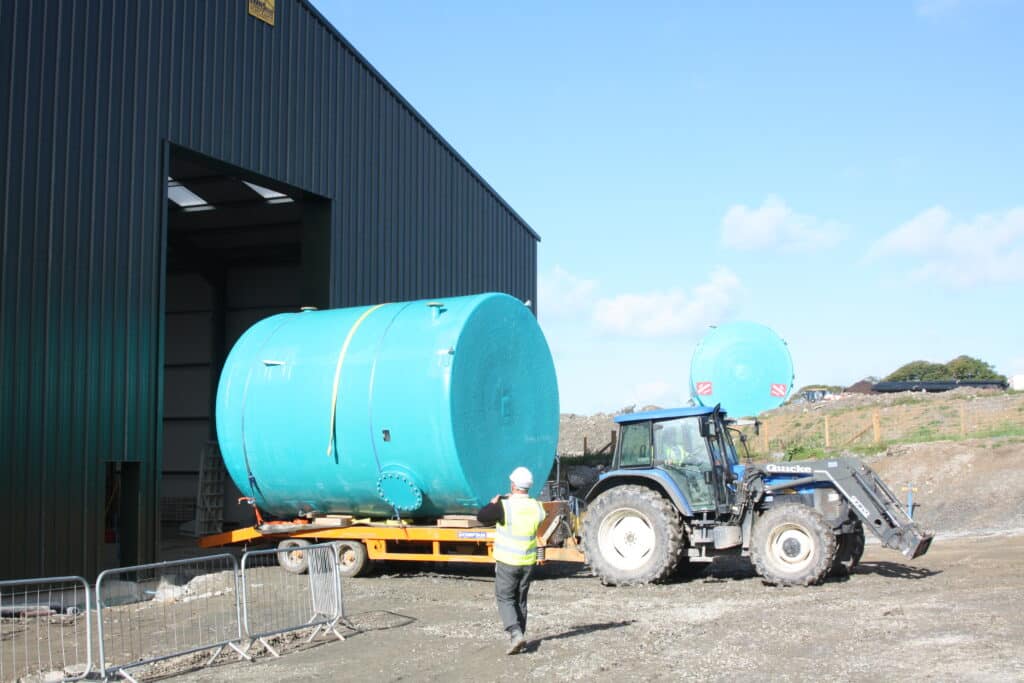
- 68,000 litre capacity in a 4m internal diameter tank at around 6.5m high
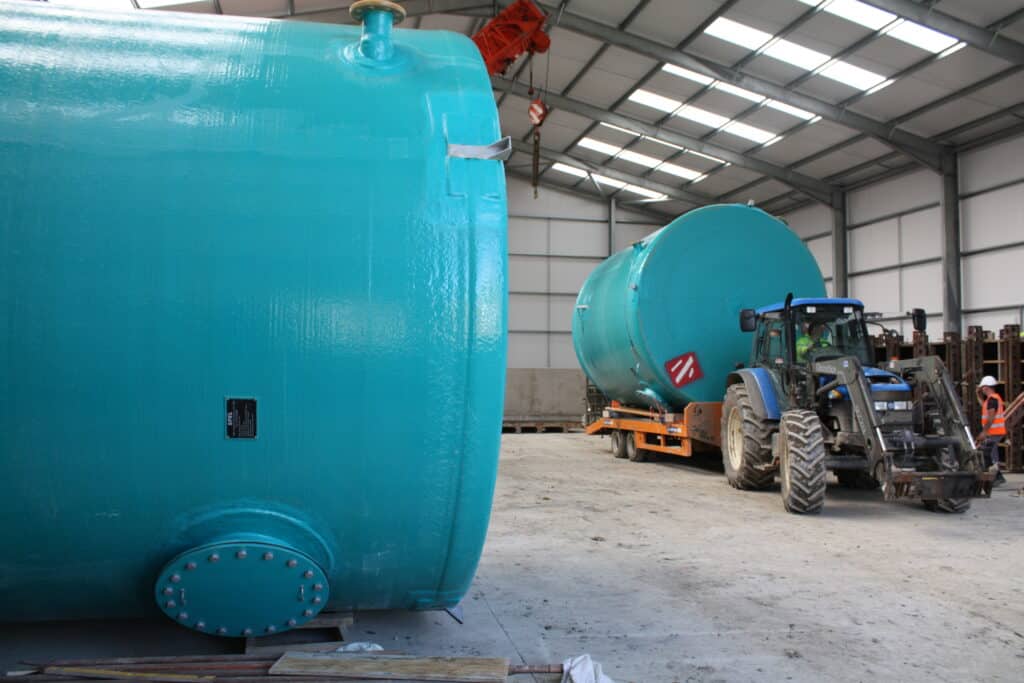
- Included a large number of bespoke fittings to suit the site specific requirements, including:
- 600mm diameter manway access with GRP flanged and bolted lid
- 3no. 6″ PN16 flanged connections for inlets/outlets/overflows
- 4no. 4″ PN16 flanged connections for level sensors, pressure transducer and vent connection.
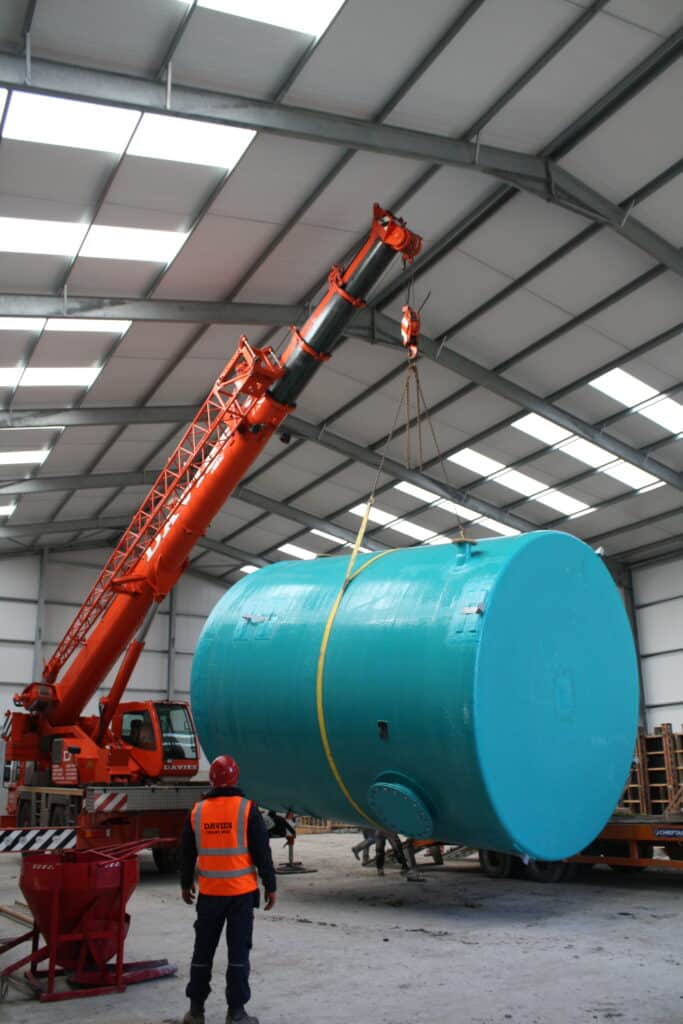
- 4no. lifting points and 4no. hold down points (supplied as standard by SPEL)
Asgard Renewables are a company based in Wales that are ‘Specialists in Food and Liquid Waste Disposal’. Through their ‘AD’ Process, they take wastes like food wastes, agricultural
slurries and waste liquids and convert them into a biogas through the Anaerobic Digestion process. Using digester tanks, bacteria breaks down the organic material, which then releases energy as a methane fuel. The methane gas fuels generators which covert the gas into energy to be distributed to the National Grid. Any nutrients recovered are used as a fertiliser inline with the Biofertiliser certification scheme.
As part of the Anaerobic Digestion process, large above ground storage tanks were required for the waste water from the process. Due to the very bespoke nature of the site including multiple connections for inlets and outlets and level sensors, SPEL were chosen due to our ability to meet the site specific requirements of the customer.
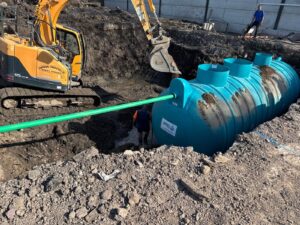
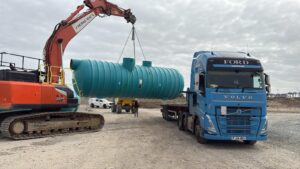
The tanks were placed within a building for protection from the wind and to be positioned in the best possible location to integrate with the rest of the anaerobic digestion system. The tank sizes were chosen with careful consideration to the total height available within the building and with careful consideration around how the tanks could be offloaded/placed into the correct position within the building.
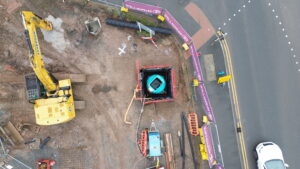
As can be seen in the photos, a small, mobile crane was used within the building to offload the tank and place it into its final position. SPEL tanks are not designed to take any internal pressure beyond standard water pressure and therefore these tanks were accompanied by the large anaerobic digestion tanks (supplied by others) where the methane digestion etc. takes place.